What You Didn’t Know About Most Fishing Apps
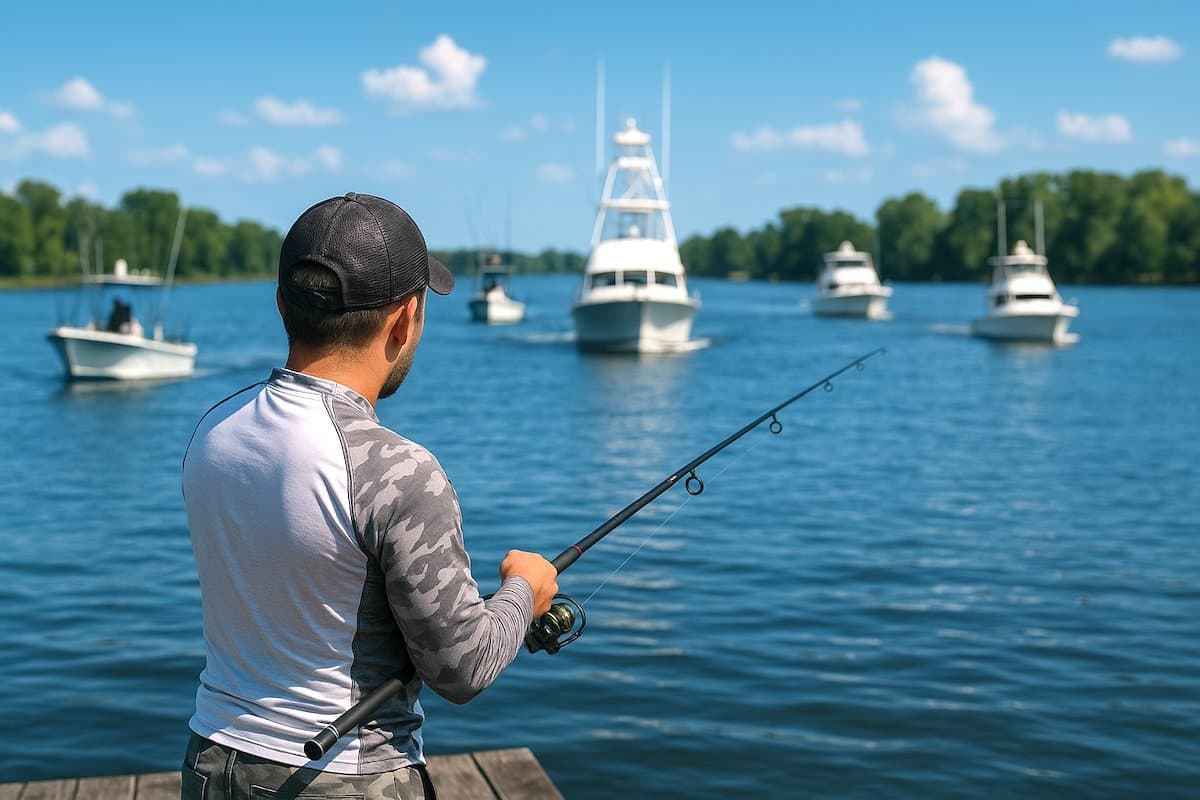
There’s a certain kind of fisherman who still rolls their eyes when someone mentions “fishing apps.” Usually the same guys who’ve got notebooks full of scribbles, hand-drawn maps, and tide charts yellowed from years of boat spray. And honestly, they’re not wrong—most of the apps out there are a mess. They feel like they were designed by someone who’s read about fishing, not someone who’s missed dinner because of it.
Some out there are trying to be “Facebook for fishermen” instead of an actual logbook, others feel like tax software with a bass logo, and a few feel like glorified scrapbooks with fish emojis. It’s no wonder a lot of fishermen still reach for a pencil instead of a touchscreen.
But somewhere between the overdesigned junk and the stripped-down stuff that crashes more than an old Windows 98 boat computer, there’s room for a fishing app that—to steal a line from the turtleneck guy—”just works”… and doesn’t need two-factor authentication to log a bluegill. In other words, an app that’s simple, fast, and built by/for somebody who actually fishes.
Let’s start with what’s broken.
Why Most Fishing Apps Miss the Mark
You’ve seen the type—an app that feels more like social media than fishing gear. You go to log a catch and end up wading through ads, upgrade prompts, and a feed full of people posting “motivational quotes” over stock trout photos. Half the screen’s trying to sell you a premium map, the other half’s guessing which lake you’re on.
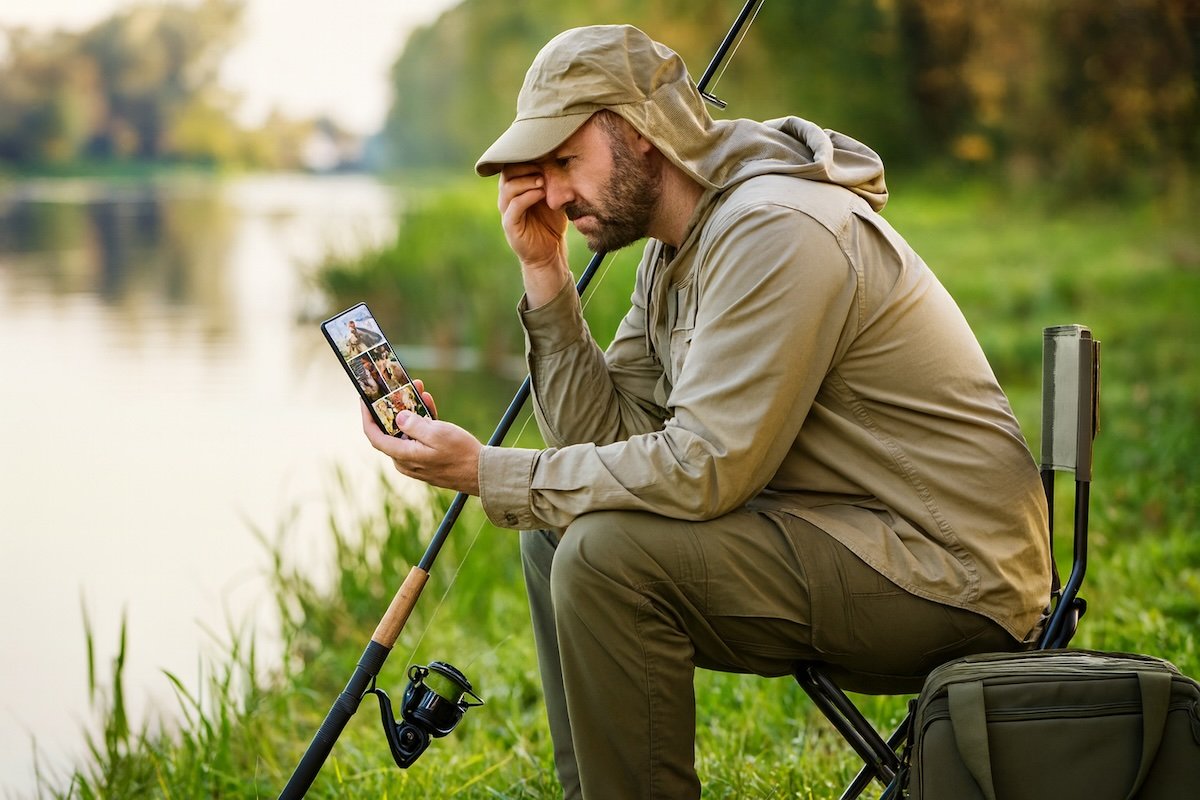
Even when you switch to “private mode,” it feels like your coordinates still somehow end up lighting up the community map like a chum slick on calm water. (Well, at least being used to influence the general activity layers or prediction zones.) That’s because a lot of fishing apps aren’t built for fishermen—They’re built for “engagement.”
Anyway if you’ve tried a few—you’ve already experienced the pattern: they promise everything from community leaderboards to secret spot sharing, but once you open the app, it’s either bloated with ads or so clunky you’d rather just fish blind.
Most of that comes from trying to be too many things at once—half social network, one-tenth logbook—so the stuff that matters, like “catch data,” ends up buried in menus, pop-ups, and omnipresent “Pro Plan” buttons.
The ones that lean too heavy on the “sharing” side, without giving proper data controls? They can turn into public GPS leak factories for your best fishing spots. That happens because some social fishing platforms may aggregate user uploads to train their maps—even when those uploads are marked “private.” In other words, even when some apps imply your data’s private, the map could still be feeding anonymous catch trends into community overlays—which means your “secret spot” could theoretically be showing up as a bright orange hotspot for half the county by next weekend.
And of course, the ones that bury you in seemingly never-ending pop up ads while you try to log—those are dead in the water.
Most fishermen want the same three things out of a log:
- Speed—You don’t want to be tapping through menus while a bite window is closing.
- Accuracy—If you’re going to log something, capture the environmental conditions and context: time, weather, water temp, current, moon phase, pressure.
- Ownership—The data you record should belong to you, not some app developer farming it for engagement.
Yet it’s shocking how many fishing log apps fail on at least one—usually all three.
Take the big community apps. They’re great for scrolling and killing time, but half the time you’re seeing someone else’s pond bass three states over. Not much help for catching fish in your home waters. Then there are the over-engineered ones that grill you like a game warden, asking you for lure details, hook size, and water clarity before you’ve even unhooked your fish. (Works fine at a desk—falls apart fast fast when your hands are wet and the wind’s trying to take your hat.)
That’s why usability matters more than horsepower. If an app can’t help you log a catch while the boat’s rocking, your hands are slick and there’s a fish still flopping around, it probably doesn’t belong on a boat. The best systems can quietly pull real environmental data in the background—barometer, tide, moon, current—without having to ask you to look up all that information and provide it yourself.
Certain popular fishing apps lean way too hard into the social sharing side, and that’s fine if you’re only into scrolling, following, and posting. But once the likes and leaderboards take over, the whole thing stops feeling like a fishing log. Log.Fish was built as a powerful fishing log app first—not a social platform that happens to track fish from time to time. Sharing’s still there if you want it—but only when, where, and with who you decide.
Certain fishing apps lean way too hard into the social sharing side, and that’s fine if you’re only into scrolling, following, and posting. But once the likes and leaderboards take over, the whole thing stops feeling like a fishing journal. Log.fish was built as a powerful fishing log app first, not a social platform that happens to track a crappie from time to time. Sharing’s still there if you want it—but only when, where, and with who you decide.
The Wish List Fishermen Keep Asking For
Most fishermen who’ve tested these things ends up asking for the same handful of features:
- One-tap logging—Snap a photo, it auto-fills the rest: location, time, weather.
- A usable map—Preferably bathymetric, not just a Google satellite image. Bonus points if you can draw on it.
- Exportable data—Because if you can’t review it on your laptop or spreadsheet later, it’s basically just trivia.
- Private by default—You shouldn’t have to dig through settings just to protect your spots.
- Optional sharing—Because sometimes you do want to collaborate—just not with the whole internet.
That list hasn’t changed much in ten years. What has changed is that the tech has finally caught up. Phones are faster, GPS is so accurate it could drop a jig in your livewell from space, and weather apps are only wrong half as often as they used to be. There’s finally enough power in your pocket to log everything that matters without it slowing you down.
The problem was never the idea of a fishing tracker app—fishermen have wanted this forever. We’ve all tried the half-baked versions that promised to “change the way you fish” and ended up abandoned by the next update. What we really wanted was a tool that actually worked in the field. Something you can use with wet hands, with glare on the screen, in that 5-second window before the next cast.
The best fishing apps don’t reinvent the wheel—they just tighten the drag on the one you’ve already got.
Why Catch Logging Still Beats Relying on Memory
Ask any old-school fisherman and they’ll tell you: you can’t trust your memory. You’ll swear you caught that smallmouth on a white spinnerbait under a cloudy sky—then look back and realize it was flat-calm and you were throwing a jerkbait. Fishing memory is selective.
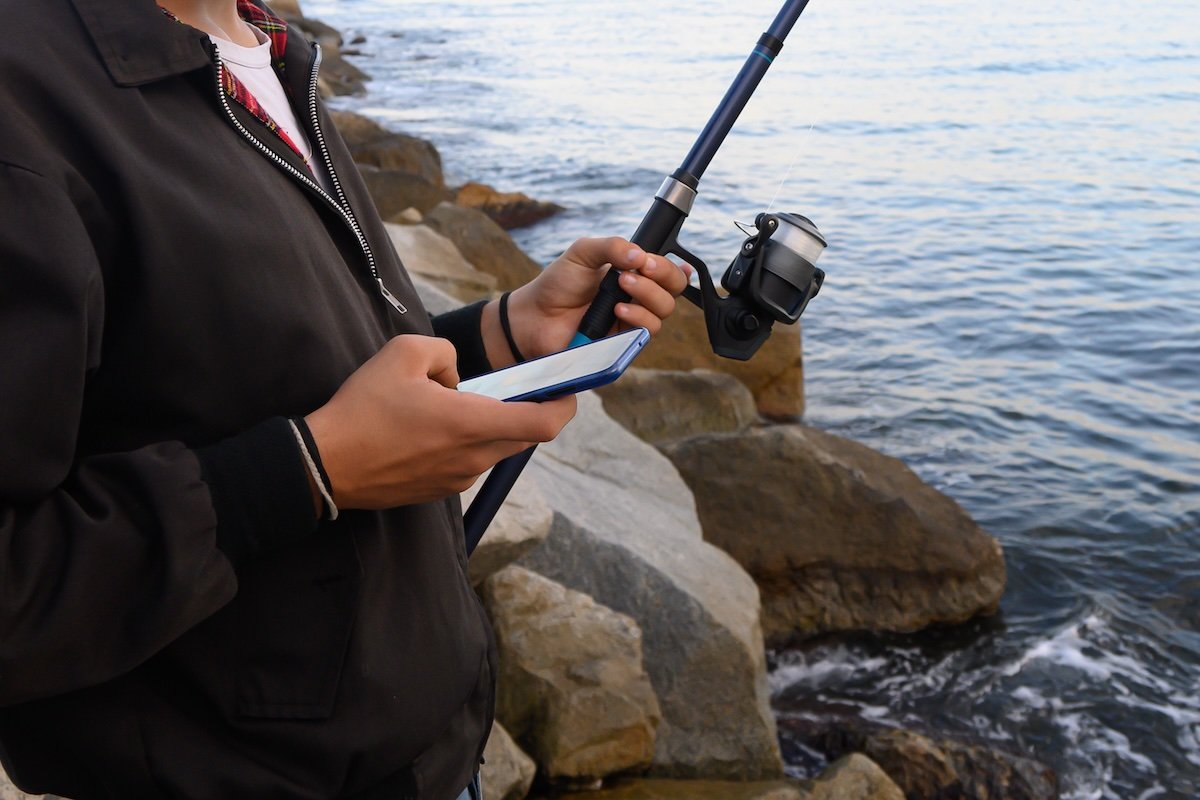
That’s why a good catch log is more than a digital scrapbook. It’s a feedback loop. Every entry tells you something—when fish moved shallow, when a front shut them down, what the barometer was doing when that one hot bite turned on. Over time, patterns start jumping off the page (or the phone screen, in this case).
And that’s the part most apps never get right—they make logging tedious instead of automatic. But it doesn’t have to be. The technology exists now to pull real-time environmental data automatically from radar and buoys. The kind of info that used to take manually referencing NOAA maps, tide charts, and a dozen browser tabs can now update in the background while you fish.
That’s where the next generation of apps is headed.
Smarter Fishing, Not Busier Fishing
The future of fishing tech shouldn’t be about adding more steps—it should be about removing them. The apps that will survive the next few years are the ones that take the work out of data collection.
Imagine laying a fish on your bump board, snapping a quick photo, and everything else just happens in the background: coordinates, moon phase, pressure, temperature, wind direction, tide movement—logged before you’ve even wiped your hands.
That’s where things are going now. We’re entering an era where your fishing log can gather more detailed information about your most recent catch than most people will ever write down about anything in a lifetime—without interrupting the moment. No manual entry, no guessing the tide cycle, no taking screenshots of weather apps.
The idea isn’t to turn your fishing trip into a data entry trip. It’s to make the data serve you—to give you that quiet edge on the water, the one that makes a good day make sense in hindsight.
(After all, nobody ever won a tournament with a clipboard in their hands.)
The Privacy Problem
For a lot of fishermen, the reason they still reach for pen and paper has nothing to do with nostalgia. It’s trust. When an app asks to use your location, they’re not thinking about your honey hole—but you are.
And, it’s for good reason. Many of the most popular apps on the iOS App Store or Google Play built their entire business model on shared user data.
That means even if you mark a spot as “private,” it might still feed into aggregated heatmaps, species reports, or “activity trends.” Your name might stay hidden, but the pattern of where and when you fish often doesn’t. That’s not paranoia—it’s how a lot of platforms work now.
And that’s why more fishermen are looking for ways to stay off the radar. They want control over their fishing logs, the ability to record and analyze their catches without giving up their best spots.
That’s where the catch logging app Log.Fish breaks from the pack quite a bit. Every log you make, every catch you save, every line you break, every note you take stays private by default—locked to your account unless you decide otherwise. Log.Fish doesn’t quietly feed private catches into public overlays or prediction models like some apps do. What you log stays yours unless you want to share it—period.
If you want to share with a buddy or within a private club, you can. If you want to keep your data completely to yourself, you can do that too. Even the monetization tools, where verified catches can be sold to other fishermen, operate on your terms. You set the price, control the visibility, and the data never leaves your control.
That control extends beyond solo use, too. When you join or create a club inside Log.Fish, you decide exactly what gets shared and who sees it. Each group runs on its own feed with custom settings—so your weekend crew or circle of fishing buddies can stay connected without broadcasting their best spots to the world. You can swap reports, run challenges, or just keep tabs on each other’s catches knowing everything stays within that circle. It’s the kind of connectedness fishermen have always had, just moved into the digital age, without giving up the privacy that makes those circles work in the first place.
The Link Between Data and Experience
The ideal system isn’t a public feed or a glorified spreadsheet. It’s something that bridges the old-school intuition with modern data. You should be able to see your last 10 trips overlaid with tide, temperature, and moon data, and actually understand why that shallow point produced one week and not the next.
And it shouldn’t take a marine biologist to read it. The design should be simple—visual when it needs to be, invisible when it doesn’t. It should act like a quiet guide that hands you the right context when you’re trying to make sense of a pattern.
That’s the kind of balance fishermen have been asking for since the first catch logs went digital. For years, nobody really nailed it.
The Best Fishing Log App: Log.Fish
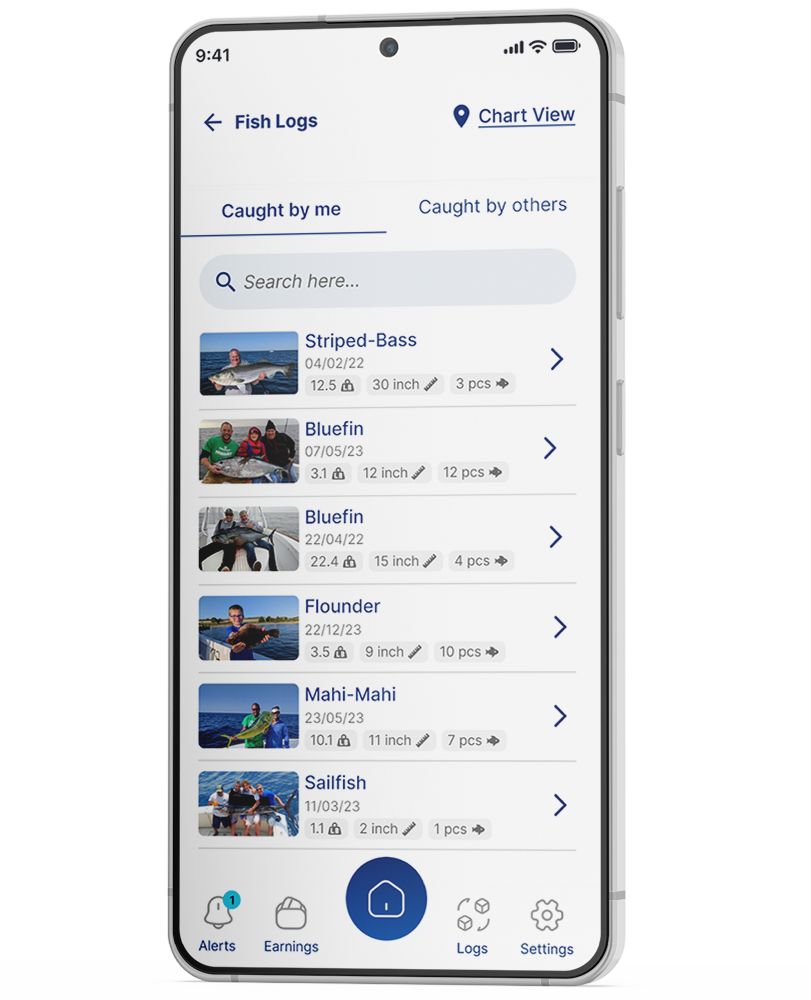
Log.Fish isn’t just another app asking for your location—it’s a tool that finally respects it. Built from the ground up for fishermen who care about precision and privacy, it takes everything that’s tedious about catch logging and automates it.
With smart catch logging, every fish you record instantly logs your catch location, time, and environmental data, without interrupting your cast or cluttering your screen. It’s one tap, and the rest happens automatically in the background.

Behind that, it quietly gathers live data from radar, tides, moon phases, nearby buoys, and current flows, giving you a complete picture of the conditions that are relevant. You can open your log later and see exactly what was happening in the water column when that bite happened.
Built by Fishermen
Everything in Log.Fish revolves around control. Your catches are private by default—stored securely, encrypted locally, and never used to populate community maps, leaderboards, or hidden trend reports. You won’t find your spots showing up as “regional activity” on someone else’s feed, because nothing leaves your account unless you decide it should.
Even the optional monetization tools and shared logs work the same way: you choose what to reveal, who can see it, and when. It’s your data, your spots, and your call every time you open the app.
But when you do want to collaborate, Log.Fish makes that simple too. Community-driven sharing lets you connect with other fishermen without losing control—share a catch with your buddy, post a verified report to your club, or trade intel inside private circles that don’t bleed into the public map.
And if you like the competitive side of things, modern clubs and tournaments are built right in—no extra apps, no spreadsheets. Real-time leaderboards, verified scoring, automated results. It’s the same power tournament organizers spend hours managing—now handled seamlessly while you fish.
Log.Fish helps you get the kind of insight you’d normally build over years of experience. Just much, much faster and without all the clutter. Whether you fish for fun, run a charter, or just like knowing why the bite turns on, it’s built to adapt to the way you fish.
Because in the end, the best fishing tracker app isn’t the one that you spend the most time on. It’s the one that does its job well, does it quickly, and gets out of the way so you can focus on the thing that really matters: catching more fish.
Frequently Asked Questions About Fishing Log Apps
Q: Is it worth logging every catch?
Absolutely—but only if the process doesn’t slow you down. A good log isn’t just a record, it’s a pattern detector. Over time, it keeps track of when fish feed, how weather fronts affect them, and what combinations of time, tide, and temperature line up best for success. (And that can even include logging trips when you don’t catch any fish—it’s just as important to know what doesn’t work.)
Whether you fish competitively or just like improving your odds, consistent data makes fishing more productive.
What makes the difference with an app like Log.fish is automation. When your app captures everything automatically—location, tide, barometer, and moon phase—you’re not “doing data entry.” You’re building a personal playbook that gets smarter every time you fish.
Q: How private are most fishing apps, really?
That’s where things get tricky. Many apps that claim to keep your data “private” still use it anonymously to populate heatmaps or trend data. It’s not necessarily malicious—it’s just how social-oriented systems operate. But it means that your private catches can still influence the visibility of your local spots.
The alternative is a platform designed around true data sovereignty—where your logs are stored securely and never repurposed for other users. Log.Fish takes that approach. Everything you record is private by default, and nothing gets shared unless you explicitly decide to. No background sharing, no silent opt-ins.
Q: Can I use a fishing app without sharing my location?
Yes—but you’ll want one built for that purpose. Many apps tie logging features to GPS, meaning you can’t disable location without losing functionality. The smarter solution is selective sharing: the ability to log your precise coordinates privately, then publish only general data (like the body of water or region).
Log.Fish’s privacy settings go even further. You can hide coordinates entirely, blur map locations, or share within a private club of trusted friends. It’s built for fishermen who know that a good spot is often earned, not always crowdsourced.
Q: Can I export my data or analyze it outside the app?
That’s one of the biggest frustrations with a lot of fishing apps—they trap your data. Even if you spend months logging catches, there’s no easy way to download it for review. Log.Fish changes that. You can export everything to a spreadsheet, analyze catch rates, sort by moon phase or barometric pressure, and build custom graphs if that’s your thing.
It’s your data—you should be able to use it however you want.
Q: What about weather, tides, and forecasts?
Environmental data is where the biggest breakthroughs have happened. Log.Fish’s Integrated Environmental Engine pulls live readings from NOAA, radar, and buoy networks to overlay real-time and forecasted conditions. You can track wind direction, salinity, current flow, and wave period in the same interface you use to log catches.
That means no more jumping between five apps to get the full picture. The same screen that shows your catch history can show when conditions will align again—a tide cycle, moon phase, or pressure drop away.
Log Smarter. Fish Better. Own Your Data.
Log.Fish gives fishermen the tools to spot patterns, track performance, and learn from every trip—without handing over their hard-earned intel. Catches, locations, and conditions are saved automatically, so you can spend less time typing and more time fishing.