Using a Fishing Log App vs a Paper Logbook
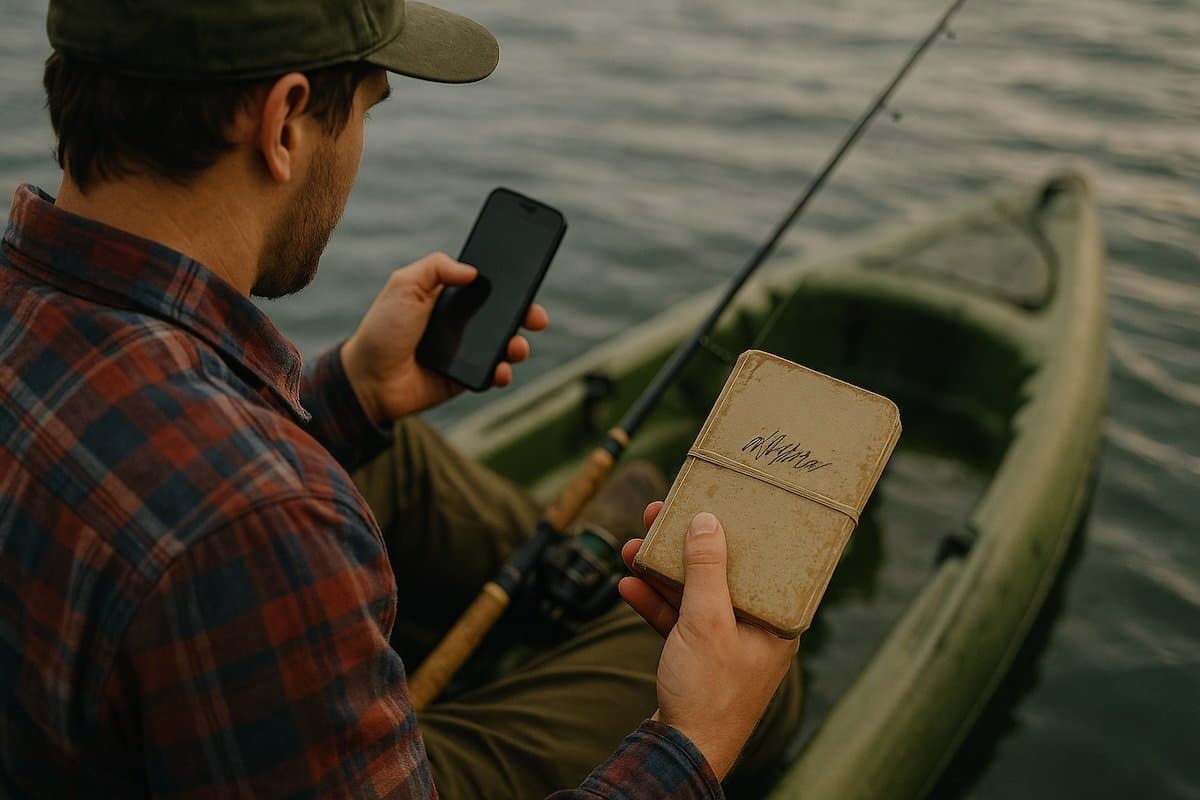
I’ve fished most of my life—off docks, out of kayaks, inshore, offshore, solo, with crews, in good weather and in real dumb weather. I’m not a guide or a YouTube personality or anything like that, but I’ve logged enough hours and miles to know when something helps me catch more fish, and when it just gets in the way.
Over the years, I’ve tried just about every method for tracking trips. Jotted notes on bait shop receipts. Downloaded apps that felt like they were made by people who’d never touched a rod in their life.
I kept a paper logbook for years. One of those weatherproof field notebooks, rubber-banded shut, warped from salt spray and coffee spills. It sat in the center console of my boat, wedged between old leader spools and a pair of busted needle-nose pliers I meant to replace but didn’t for years. And through it all, that little field notebook stayed wedged in the boat, filling up with whatever I could remember by the time I got back to the ramp.
And I’ll be honest—it worked. Sort of. But after trying one of the top fishing log apps for iPhone a while back, I haven’t cracked that notebook open once.
And it’s not because I suddenly stopped caring about tracking tides, bite windows, or what lure worked where. It’s also not because I can’t literally “crack” it open anymore because it’s now permanently fused shut from damp salt air and what I hope is old squid juice. It’s because—like a lot of guys I’ve fished with—I realized the app does all the things I was trying to do…just way faster, cleaner, and without having to flip through months of smeared ink trying to remember which moon phase the reds were popping on last fall.
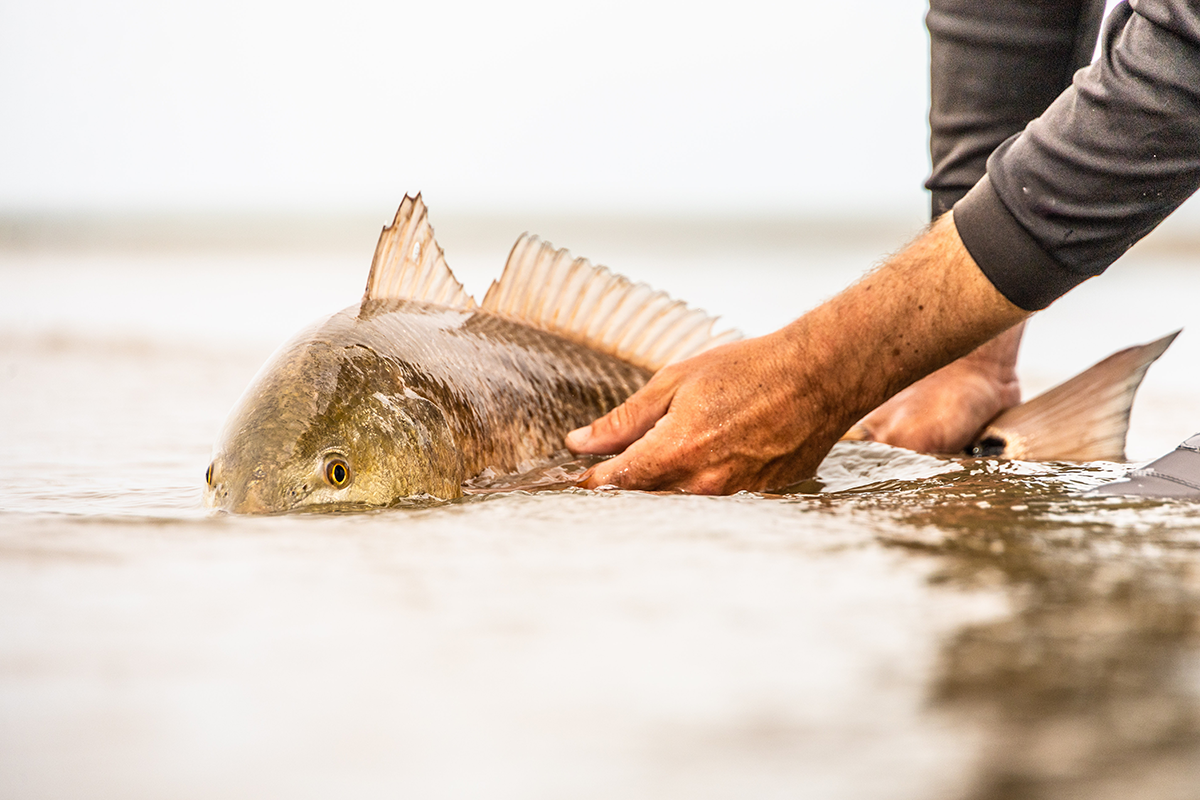
Moments like this are why many fishermen keep a log—whether it’s scribbled in a notebook or saved in an app. A redfish heads off and the details fade fast—unless you’re logging while it’s fresh.
At this point, I’ve looked into just about every option out there—including this one—and figured it was worth laying out how it compares to the old-school way. So if you’re still on the fence, here’s a comparison of the two:
Why We Even Bother Logging Catches in the First Place
Whether you’re chartering, fishing tournaments, or just trying to get better every season, logging your trips is how you turn guesswork into patterns. You fish enough, you start to feel when things are off—wrong barometer, wrong wind, wrong bait. But over time, memory gets fuzzy. Was it that northeast wind that turned things on? Or was it just coincidence?
Was that bomber day in March before or after the cold front?
That’s where a log of some sort helps. It’s not just about keeping track of the numbers, it’s about building your own personal almanac. And once you start doing that, the format you use can really make a difference in how efficient and effective your catch log actually is.
The Case for Paper
What’s Good About the Old-School Logbook
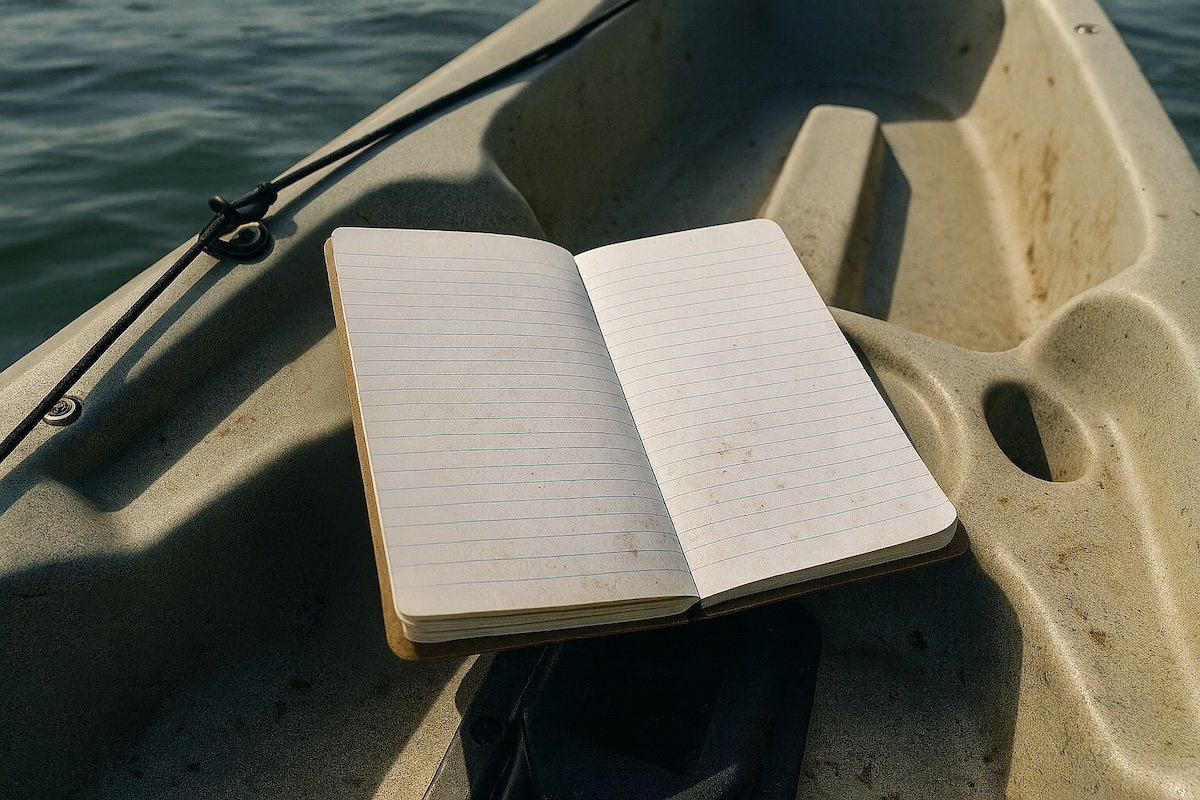
Reliable, low-tech, and always on—until the pages stick together.
The analog method to catch journalling does have its upside. For starters, paper notebooks are cheap and don’t require a lithium battery. So, if you’re the kind of guy who still runs an old flip phone or trusts hand-tied leaders over store-bought, writing stuff down probably feels second nature.
And when you keep it simple—date, time, water temp, tide, maybe a note on bait and depth—it works fine.
But that’s the thing. It’s simple. And so, if you want to dig back through entries to actually figure out when the specks turned on last year, or compare spring runs across two different spots—it turns into a mess of wet pages and half-legible scritches. You can’t search it, sort it, or quickly cross-reference much of anything unless you have time to sit and spread it all out across your kitchen table.
Where Fishing Log Apps Pull Ahead
I’m not big on changing what works. Especially not when it comes to fishing. If something’s been getting the job done—even if it’s a little rough around the edges—I’ll usually just stick with it. That’s how I ended up using the same beat-up notebook for years to track my trips. Logging weather and tides, moon phases, what lure I threw where, whether the bite was hot or ice-cold—I scribbled it all down in the same salt-stained pages.

Pictured above: A dramatic re-enactment.
It wasn’t perfect, but it was mine. And it felt like part of the ritual.
Still, it was a hassle a lot of the time:
- Messy handwriting (that’s my bad).
- Saltwater and damp air worked their magic—by the end of the season, half the pages were stuck together just from getting wet and drying again.
- Half the time I couldn’t remember what I meant by a note like “[unreadable] bite at 3pm on corner” 2 months later.
So eventually, I started looking into other ways to track the important stuff. That’s when I got curious about fishing log apps. I didn’t expect much—but I was surprised by how far some of them have come.
That brings me here:
Why I Don’t Use a Notebook Anymore
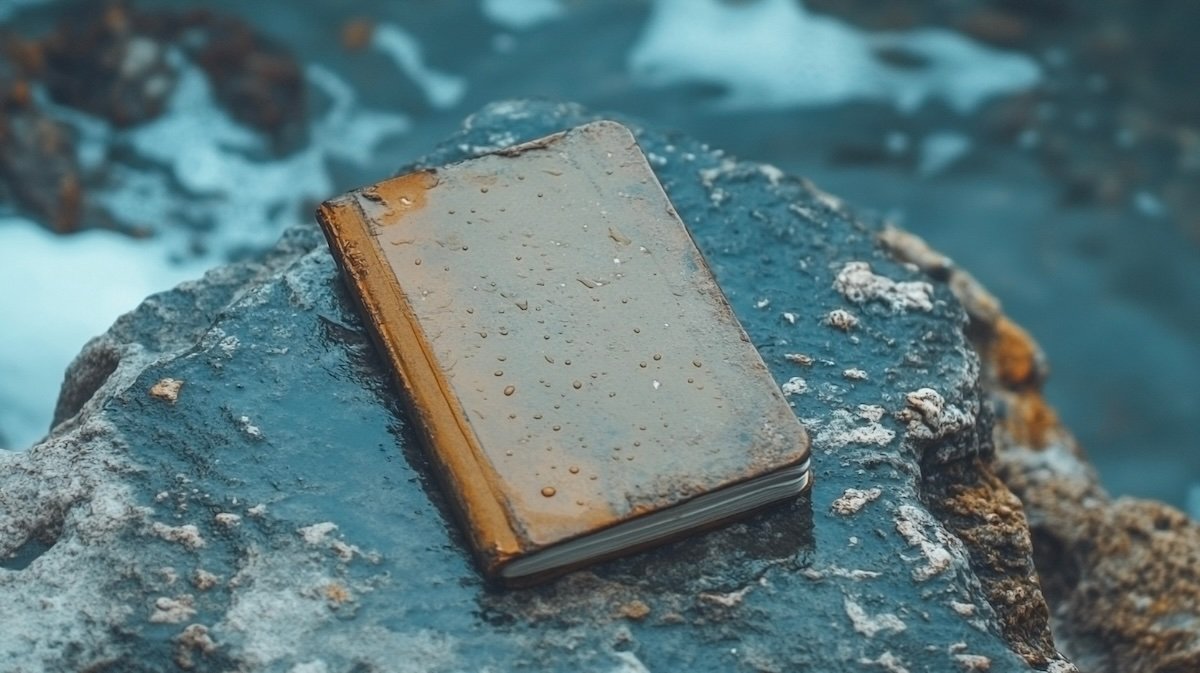
Somewhere in there is a tide chart, a moon phase, and a decent redfish bite—but good luck peeling it apart to find them.
A good fishing log app doesn’t just replace some pieces of wet paper. It can replace your memory, your weather app, your tide chart, your moon phase tracker, and your screenshot folder full of fish pics.
The best fishing apps (whether you’re on iOS or Android) pull in all that data automatically the second you log a catch—location, tide stage, water temp, moon, even wind speed—all saved without you having to type a thing. It’s kinda like keeping a log with a built-in meteorologist with a GPS system tagging along on every trip.
The one I use now lets me go back and filter catches by species, lure, spot, moon phase—you name it. So, want to know when you caught your biggest snook last year, and what the tide was doing? It’s a few taps away. Let’s just say the best ones are built with actual fishermen in mind. The kind of apps that don’t make you jump through lots of menus with wet fingers.
If it doesn’t work offline, if it takes longer than 5 seconds to log a catch, or if it tries to turn my fishing trip into a social media event without my permission—I’m out.
The Benefits That Can Catch You (and the Fish) Off-Guard
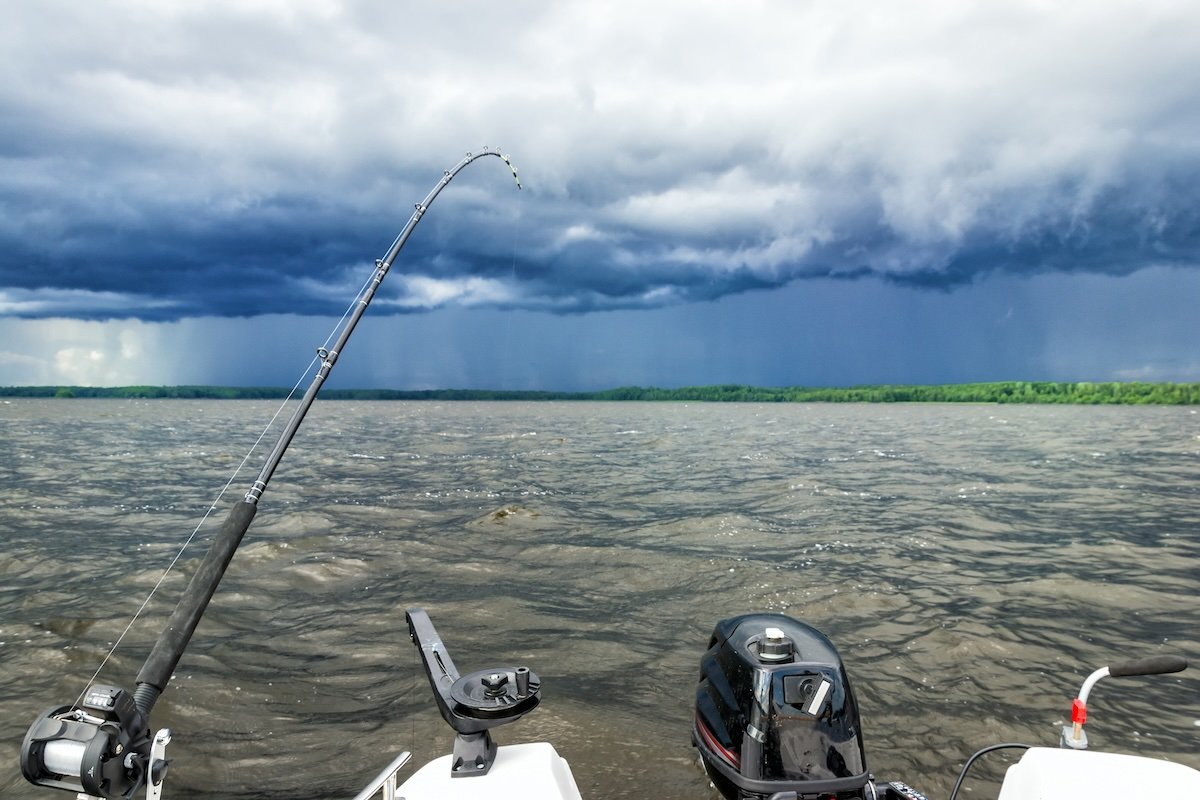
Fish aren’t the only thing that can sneak up on you. You can’t stop the weather—but logging what it was doing when the bite turned on (or off) can help you plan next time.
Some of the newer fishing log apps go way beyond just logging. The one I use has this setup where your catch photo automatically saves with all the data tied to it. One tap, and it’s logged.
But behind the scenes, it’s also pulling in data from NOAA buoys, radar, salinity maps, wave periods—you get this full environmental picture that you can’t recreate with a pen and paper.
I didn’t think I’d care about moon rise or current flow until I started seeing patterns that lined up with that data. Now it’s one of the first things I look at when planning trips.
You can also join clubs inside the app—like, actual ones that don’t rely on Facebook groups or some half-broken website. We can have a tournament series running entirely through it now. Leaderboards update live, scoring happens automatically, and nobody needs to try to sort out photos and weights from a group text thread.
Even if you’re not into tournaments, just having that shared space to track and trade info in a controlled, private setting has been huge.
What You’ll Start Noticing When You Use a Good Fishing App Instead of Paper
This was the biggest surprise for me: once I stopped spending so much effort on collecting the data and started looking through it, I started noticing patterns I would’ve missed. With my old logbook, I could tell you how many trout I caught in April. Maybe even what I caught them on. But I couldn’t zoom out and see that the best days all had a falling tide that lined up with a southeast wind and a moon at 65% waxing. That kind of combo isn’t so easy to spot when you’re flipping through pages by hand.
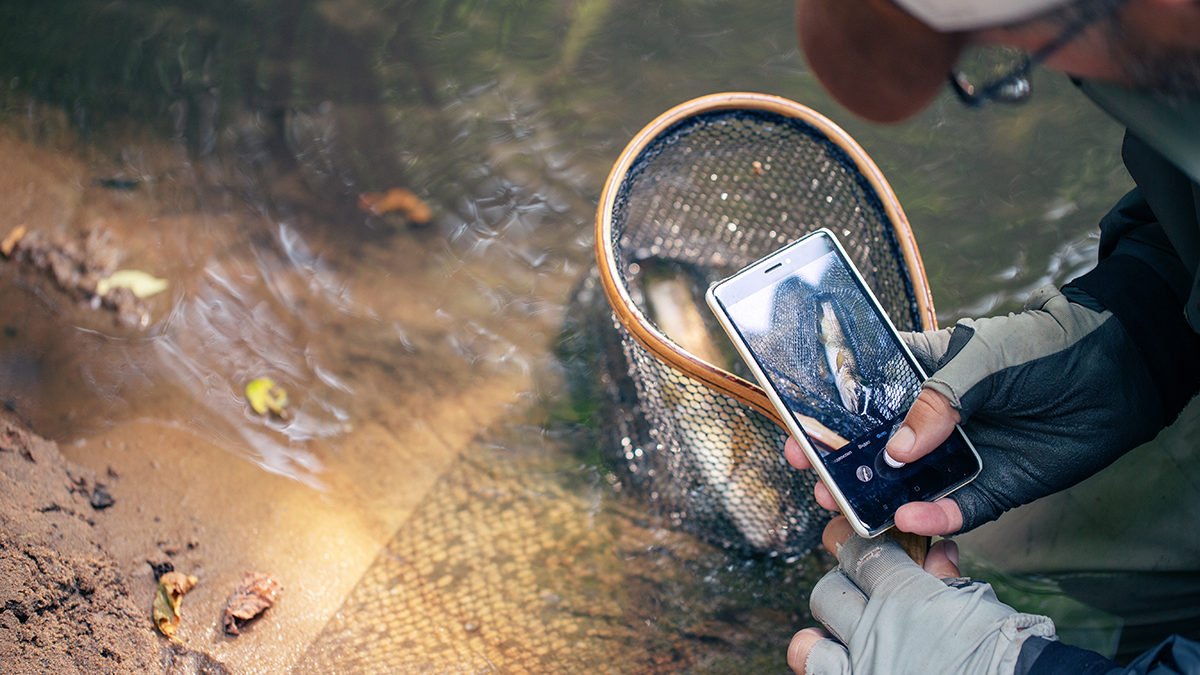
Whether you’re using an Android or an iPhone, the app Log.fish pulls all kinds of data (date, time, GPS, weather conditions, tides, and more) automatically when you snap a pic of your catch.
The best fish logging apps lay that out for you. You get maps, filters—you can slice the data a hundred different ways, if you want. And that’s not just for “nerding out.” It helps with actual “stuff,” like:
- Picking the best day for a trip, based on past success
- Deciding which spot to hit on a busy Saturday
- Figuring out what time of day the bite usually heats up
- Dialing in seasonal shifts year-over-year
This is the kind of intel you think you remember—until you realize how off your memory actually is. e.g. I always thought the flounder turned on in early May at a certain inlet. Turns out, it was usually the 2nd or 3rd week of April when the tides matched up right. That shift alone might have saved me a couple of dead mornings last year.
Privacy vs Sharing
Some folks (understandably) get weird about logging catch data into an app—like it’s going to leak your best honey hole to the world. Fair concern, but the better fishing apps these days keep everything private unless you choose to share it. And the ones worth their salt give you full control over what gets shared, with who, and how.
You can share logs with your buddies or crew without revealing coordinates, or keep everything locked down just for your own tracking. The fishing log app Log.fish even lets you monetize your catch information. If that’s your thing, you can list verified catches and let other fishermen pay to access the details—where, when, how. You get paid, the app handles the rest. Not everybody’s into that, but it’s a pretty slick option to have.
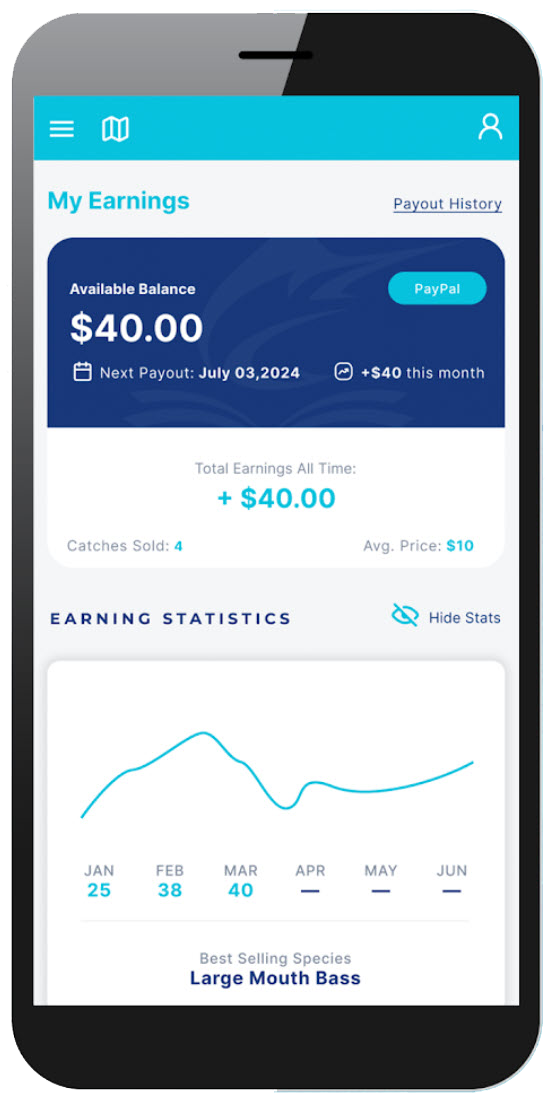
The main point is it’s your info, you choose what to do with it.
“What About Battery Life… or Spotty Cell Signals?”
Now, before you think I’ve completely gone off the deep end for apps, let me hit “pause” and talk about where paper still has the edge.
- If your iPhone dies, obviously no “iPhone app” is going to help you right then and there.
- If you’re in a dead zone miles offshore, it won’t help you log unless it can work offline. Fortunately, some do work offline and sync later (the better apps like Log.fish do) as long as you still have your device to take pictures and/or log stuff.
That’s why I keep a backup notepad in the boat. Just a mini one, tucked in the dry bag. It’s rare I need it, but if something weird happens—like I forget my phone in the truck or I’m testing a new spot with zero signal—I’ve still got something to jot down catches, tide info, etc. before I forget it all. So yeah, paper still has its place. It’s just not my personal “go-to” anymore.
Final Word
Who Should Stick with Paper (and Who Shouldn’t)
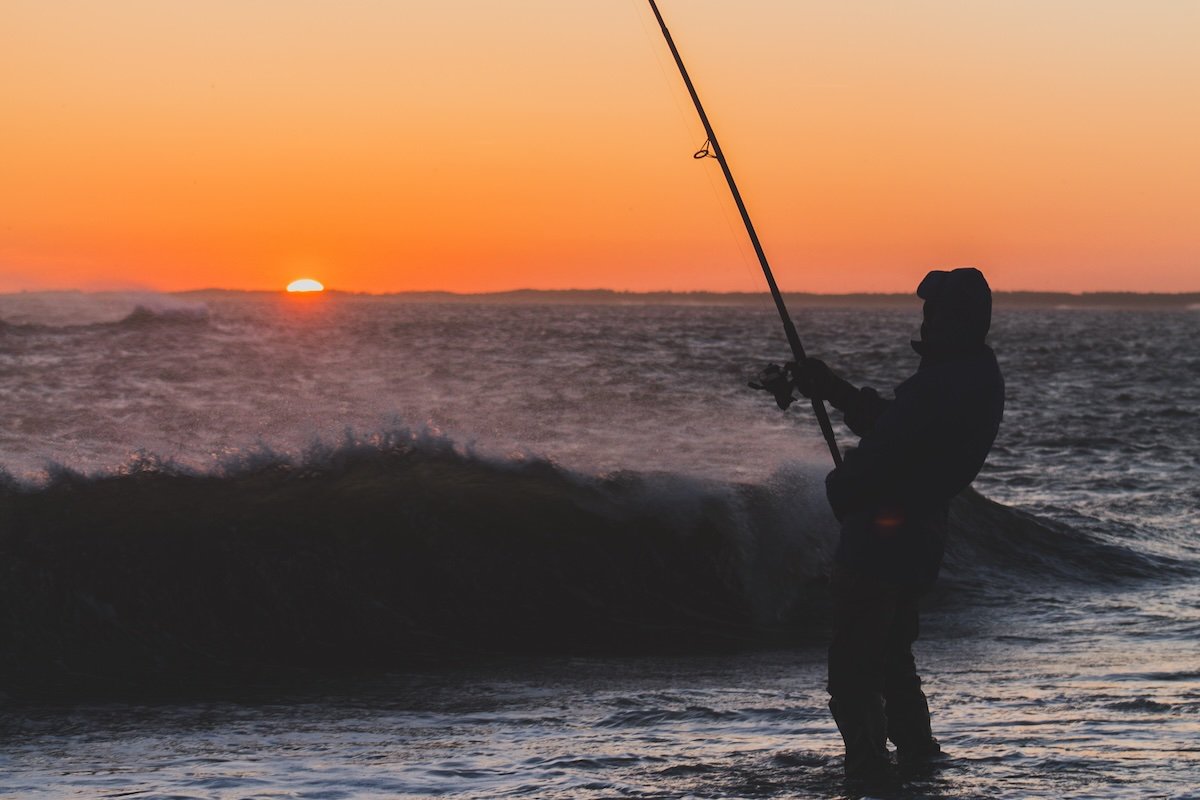
Sunset, rod bent, fish on—but if all you’re tracking on paper is “caught one at sunset,” don’t expect your log to tell you much later. If you want to figure out why that bite happened—and how to line it up again—you’ll need more than a date/time and a doodle of a redfish in the margin.
If you only fish a couple times a year, don’t care about long-term patterns, and just want to keep a few notes for memory’s sake—a paper logbook will do fine. But if you’re out there often, fishing competitively or just trying to get better… the scale tips toward using an app pretty fast.
And when you find one that’s built well (and one that works on your chosen phone’s ecosystem of iOS or Android), doesn’t nag you with gimmicks or obnoxious ads, and helps you catch more fish, you probably won’t want to go back to a paper logbook except for a backup in case you forgot to charge your phone. The best fishing apps today do more than just log your trip. You track your own trends. You plan better. You fish with direction. And when it’s time to look back, all the info’s there—organized, searchable, and ready to put to use.
Still bring a pen, sure. But don’t miss out on everything the new stuff can do. It’s like switching from a flip phone to a smartphone. You’ll wonder how you ever did it without it.